
The federal and Ontario governments committed this week to reduce taxes and development fees on newly-constructed homes. Sadly, these sizable investments don’t include any help targeted at the millions of Canadian households most affected by the affordability crisis.
The governments have chosen measures aimed at lowering the cost of building and buying newly built homes, to boost the housing construction industry which is in a significant slump. The measures eliminate the 13 per cent harmonized sales tax on new homes for a year and reduce development charges by half for three years. Total savings measures could be $200,000 on a new million-dollar home. The federal cost is $10 billion, with $8.8 billion of that spread over 10 years.
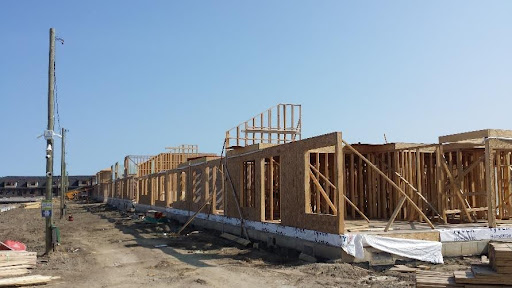 Even with recent price declines, large numbers of young adults can’t afford to buy a home unless they have financial help or inheritance from homeowning parents. That’s a significant cause of frustration and anger for many young Canadians who aren’t in the most affluent quarter of the population. And amid a steep slump in home sales, construction of new homes has stalled. So the moves were welcomed by builders and municipal leaders including Hamilton Mayor Andrea Horwath. Local homebuilders have pushed for lower development charges—the fees imposed on each new housing unit to pay for the roads, sewers and other infrastructure to allow new development. The federal-provincial money will allow Hamilton to cut those fees by more than the 20 per cent cut already approved, without having all local taxpayers absorb those costs.
There are significant problems with the initiatives, however. First, they only help those well enough off to be close to affording a home. If, for instance, 20 per cent were knocked off the average price of a new Hamilton home, you would still need an income above $150,000 to qualify to buy it. That’s down from $200,000 today but it’s still a very exclusive group.
Second, as two very different critics stressed, these large investments are poorly designed. The federal Conservatives and the Canadian Centre for Policy Alternatives criticized the investments because they lack targets, guarantees of results, accountability measures, and any guarantee that the cost reductions will be passed on to buyers.
For instance, the federal government is making $1.7 billion available to the provinces, with the only condition that it be used for housing. The government is likely seeking good will with the provinces by not imposing conditions, but it should show leadership, requiring measures that produce specific affordability gains. The federal government could also use these investments to require builders and developers who benefit to open their books to provide vital information to the government on costs and profit levels. The tax break should not apply to buyers who don’t intend to live in the units.