
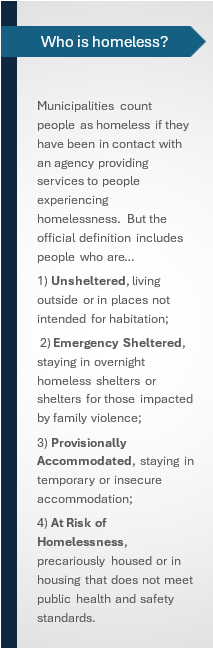
 About 30,800 Ontarians who receive social assistance benefits are known to be homeless, a new report by the Maytree Foundation shows. That is up 72 per cent since 2019. In Hamilton, 1,597 social assistance beneficiaries were homeless in 2025, up 140 per cent since 2019. Assistance rates are very low:
- Ontario Works (OW) is for employable persons who have exhausted employment insurance or don’t qualify. The maximum for a single person is $733 a month. That rate hasn’t been raised since 2018, while the Consumer Price Index was up 24 per cent.
- Ontario Disability Support Program (ODSP), for a single person with a disability that limits the ability to work, is a maximum of $1,408 and rises with inflation.
The average rent for a vacant room—not even a studio apartment, just a room—was $810 a month in Hamilton in 2024, up by a third since 2019.
So even a room exceeds the total monthly income of an OW recipient. Someone receiving ODSP could barely afford a room. But they’d have to spend almost 60 per cent of their income to do so, which would leave them little for food and other expenses. Generally, spending more than 50 per cent of income on rent is viewed as putting someone at serious risk of homelessness.
Given how low OW and ODSP benefits are and how high rents have become, it’s actually surprising that more social assistance recipients aren’t overtly homeless. The rates leave recipients in deep poverty.
There were almost 85,000 people experiencing homelessness in Ontario last year. That means 55,000 of them had incomes higher than social assistance and still found themselves homeless.