
- Allowing for-profit developers to dominate the housing market. We need lots of new housing, rental and owned, but for-profit developers won’t (or can’t) build durable, comfortable and affordable housing for the bottom third or even the bottom half of the population. Even if they could do it and make the same rate of profit that they once made, they will always build the kind of housing that is even more profitable for them, housing that the most affluent want and feel they are entitled to.
- Building enough housing units—millions across the whole country–so that the supply exceeds demand and the price comes down. We need lots of new housing. But for-profit developers will only build what will bring them what they regard as a good profit. Building excess supply is not a good profit-maximizing strategy, so they won’t.
- Sharing some of the 5 million or 12 million “extra” bedrooms that older adults have, now that their kids aren’t living at home. There’s nothing wrong with sharing one’s house or renting out a bedroom and sharing common spaces. If it helps someone willing to live in someone else’s home to have an affordable home, great. If it helps a homeowner with the costs of keeping their home, great. But what it doesn’t provide is what most of us imagine when we think of a home—a place where we have privacy, control over our own space, and security of tenure, rather than being there on sufferance, beholden to someone who has more power than we do.
 More temporary accommodations. Tiny cabins, hotels, a shared bedroom, a shelter or other temporary accommodation all meet a need to be sheltered. But the key word here is “temporary.” These are not homes. They help people survive, just as sleeping in a gym during a flood helps someone survive until the waters recede. Lack of decent- sized, appropriate permanent rental housing obliges people who have no other options to rotate constantly through different shelters or to stay permanently in temporary spaces not designed for the long-term.
 - Gutting of rent control laws. Rent controls used to apply to units and ensured that those in a rent-controlled unit would not be faced with large rent increases. Rent controls are an essential part of laws to protect tenants from eviction without cause. Changes made to rent controls rules since the 1990s undermine that purpose and the effectiveness of rent control. Now, when a tenancy ends, an Ontario landlord can raise the rent by any amount. That not only enables very large rent increases between tenancies, it also provides a strong incentive for landlords to get existing rent-controlled tenants to leave. Once they leave, a unit that might have been affordable, or nearly so, can now become quite unaffordable, which frequently happens. Allowing landlords to get approval for extra rent increases above the normal guideline, for high tax increases or to pay for certain types of renovations, also undermines the purpose of rent control. So does allowing landlords to evict a tenant from a rental housing unit so the landlord or a member of their family to move into the unit. Whether the landlord or family member actually moves in is seldom verified. All of these measures gutting rent controls have resulted in a massive decline in the supply of formerly affordable for-profit rental units.
- Various forms of first-time home buyer assistance. These enable those who qualify to bid higher than they otherwise would have been able to in order to buy their first home. But such assistance does nothing to lower prices or to make housing generally more affordable. In fact, by increasing the number of people who can qualify to buy a home and the amount they can bid, such measures push prices up.
- Rent supplements/housing benefits These are subsidies to help tenants to afford market rent that isn’t affordable on their incomes. These measures can actually work, if well designed and if rents are generally affordable for most people. They obviously help tenants if the housing benefit is large enough to cover the gap between what they can afford and their actual rent. And if a method can be devised so that the landlord does not know that a given tenant is being subsidized, they can indeed turn a non-affordable unit into an affordable one. They also have a really important role as part of eviction-prevention. If a tenant is at risk of eviction for not paying rent because of a temporary financial challenge, a housing subsidy can help them weather that challenge and stay housed.
Often, however, these programs are structured as part of a program in which landlords have to agree to participate. Many don’t agree. Most would prefer a tenant who isn’t subsidized, in case the subsidy program ends. Landlords also tend to participate in such programs either with units that aren’t in good shape—a well-designed program with inspections can prevent that—or when vacancies are high. But landlords will tend to drop out when vacancies are low and it is easy to rent units. Perhaps most important, these programs don’t add to the supply of units.
What does help?
- Funding the construction of non-profit and co-op housing. This will require major investments. At a rough estimate, we likely need to build something like four times the current number of units–that is, four times 65,000 to 800,000 units–as quickly as possible. Population growth will add to the existing need.
- Rent controls without any of the exceptions noted in item 5 above. You might ask, will that not discourage developers from building new units? There’s debate over that. But for-profit developers and for-profit landlords cannot or will not build and rent housing units that are affordable anyway. Meanwhile, tenants need protection against steep rent hikes and eviction to preserve affordable units. The Hamilton area lost about 15,000 formerly affordable units in a decade.
- Finding ways to block investment in housing except for investments in new construction or purchases intended to shift for-profit housing into the control of tenants or non-profit organization. Speculative buyers are making our housing much more expensive, whether they buy homes–single family or apartment buildings–in anticipation of quickly selling for a profit, or they buy apartments with the intent of evicting existing rent-controlled tenants to raise the rent in buildings they or a new buyer will operate. Some of them may upgrade the buildings they buy, which may be needed, but they do that to “reposition” the units at a higher rent while displacing tenants. Investments that result in fewer affordable housing units need to be stopped.
- Allowing a wider range of land uses on all single-family lots could help some. We do need more housing, and many neighbourhoods need more neighbours in them to sustain schools and businesses. Any government subsidies to build these new units have to include the condition that the units will be immediately and permanently affordability, to median and lower-income tenants.
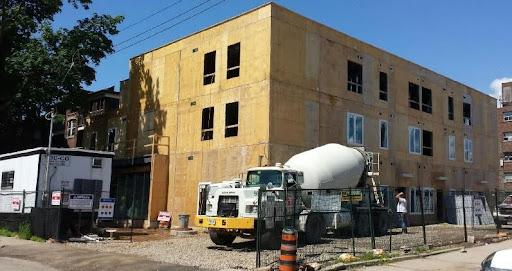
- Innovation. Residential construction has not seen a lot innovation, but there are lots of useful examples of things that could work to reduce costs and speed up projects (thus reducing borrowing costs and resistance from neighbours). What is required is building codes that are flexible, plus ways of achieving sufficient scale to allow things like manufactured or 3D-printed homes to be financially feasible, given the costs of creating factories or creating 3D printers. Mass timber is a proven technology that needs only flexible regulations to see it widely adopted, with benefits in terms of cost, speed and environmental sustainability. Consistent, high levels of government funding for non-profit and co-op housing would provide the large scale and predictable work flow to make allow many technologies to expand and effectively lower construction costs.
- Co-op housing, through member participation, provides ways to lower operating costs of housing and should be a significant part of any non-profit housing program. Beyond those benefits are the values of community that co-ops create and the ability for members/tenants to have a meaningful say in how their housing is run.